Green Economy Index – A Step Forward to Measure the Progress of Low Carbon & Green Economy in Indonesia
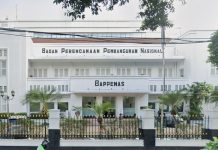
Retrieved from: LCDIThe green economy concept defined by Bappenas was adopted from UNEP’s green economy definition of an economic development model to support sustainable development with a focus on investment, capital, infrastructure, employment and skills to achieve social welfare and environmental sustainability (UNEP, 2012). Within Indonesia’s economic transformation strategy, green economy is aimed at creating high and inclusive economic growth while realizing social wellbeing and maintaining environmental quality.
Resilience in the face of disruptive events that change everything requires a departure from traditional development trajectories, as the multidimensional impact of the COVID-19 pandemic and the escalating climate crisis have hindered progress toward long-term sustainability goals. Returning to pre-pandemic economic states is insufficient for escaping the middle-income trap, necessitating a shift toward a development paradigm that integrates low-carbon and climate-resilient policies to unlock environmental, social, and economic benefits.
Economic transformation as the breakthrough centers on a structural shift from less productive to more productive sectors to achieve a high-income status by 2045, specifically targeting a minimum annual growth rate of 6%. This framework utilizes six “game changer” strategies, including human resource competitiveness, digital transformation, and the green economy, to strengthen total factor, capital, and labor productivity.
What is green economy entails an economic development model that supports sustainable growth by focusing on investment, capital, and employment to achieve social welfare while maintaining environmental quality. This paradigm eliminates the traditional trade-off between development and nature by promoting activities such as renewable energy utilization, circular economy practices, and low-carbon industrial shifts that foster natural carrying capacity and social cohesion.
Designing an inclusive framework to measure green economy progress involves establishing a contextualized methodology to track the transition from a brown-based economy to a sustainable one. This measurement tool serves as an essential evaluation mechanism for national development planning, ensuring that cross-sectoral efforts remain aligned with both domestic targets and global sustainability standards.
Mapping and defining the indicators relies on a multidimensional selection of fifteen metrics categorized into environmental, economic, and social pillars to capture the interlinkages of sustainability. These indicators, ranging from forest cover and renewable energy mix to labor productivity and mean years of schooling, are analyzed through a system dynamics model that illustrates how reinforcing loops in investment and human capital can drive GDP while balancing loops account for the negative externalities of natural capital extraction.
5 Mei 27 Mei 28 April 2021 2022 2023 2024 2025 2026 Aparatur Sipil Negara (ASN) April 2023 Desa Dokumen Dokumen Kinerja Dokumen Perencanaan Februari 2024 Februari 2025 Inspektorat Daerah Januari 2024 Kecamatan Kementerian Dalam Negeri Kinerja Laporan Hasil Evaluasi Laporan Hasil Evaluasi AKIP Laporan Hasil Evaluasi AKIP Tahun 2022 Laporan Hasil Evaluasi AKIP Tahun 2023 Laporan Hasil Evaluasi AKIP Tahun 2024 Mei 2024 Mei 2025 Music Music Album Musrenbang Musrenbang Desa Musrenbang Kecamatan Musrenbang RKPD Musrenbang RKPD Tahun 2025 Pirate Rencana Kerja Pemerintah Daerah Rencana Pembangunan Jangka Menengah Daerah RKPD Tahun 2025 SAKIP SAKIP Tahun 2024 Sekretariat Daerah Surat Surat Edaran
“Remember, there are no bad crews… only bad leaders.”
“I’ve gotten where I’ve gotten through hard work. I don’t lie. I don’t steal, and I certainly don’t cheat. And I’m not about to start now.”
“They’re not gonna catch us. We’re on a mission from God.”
“No one ever wins a fight”
“¿Quiere usted bailar conmigo?”
“Sate, 200 tusuk makan di sini.”
“There’s no place like home.”
“Say ‘hello’ to my little friend!”
“I love the smell of napalm in the morning.”
“I’m gonna make him an offer he can’t refuse.”
“You talkin’ to me?”