
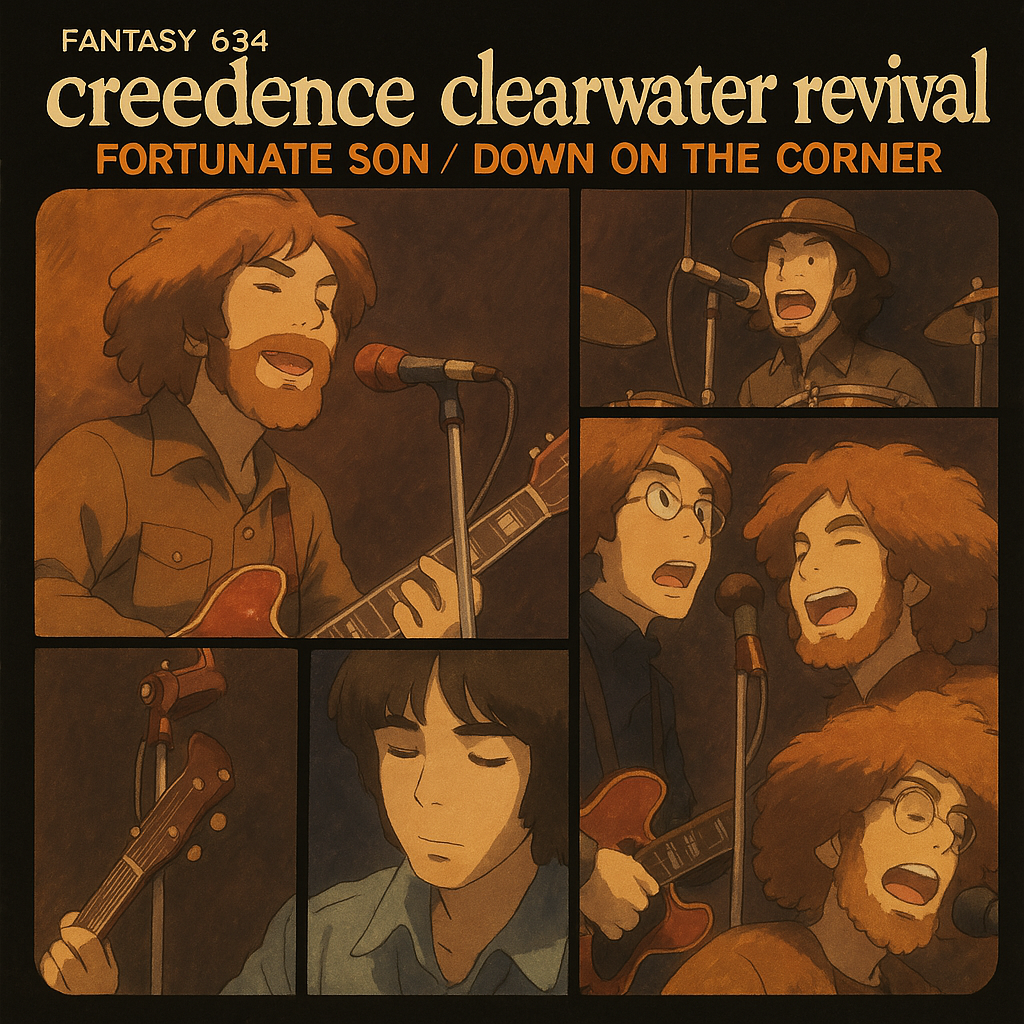
Creedence Clearwater Revival‘s “Fortunate Son,” released in 1969 as part of their album Willy and the Poor Boys, is a powerful protest song that captures the social and political tensions of the Vietnam War era in the United States. The song emerged during a time of widespread unrest, as the war divided the nation, and the draft disproportionately affected working-class and minority communities while the wealthy and well-connected often avoided service. This historical context is crucial to understanding the song’s biting critique of privilege and inequality. Written by John Fogerty, the frontman of CCR, “Fortunate Son” reflects his frustration with the hypocrisy he observed in American society, particularly how class and status could shield some from the burdens of war. The song’s release coincided with a surge in anti-war sentiment and the growing counterculture movement, making it an anthem for those who felt marginalized by the government’s policies and the establishment.
Musically, “Fortunate Son” is a quintessential example of CCR’s roots rock style, blending elements of rock and roll, blues, and country. The track features a driving rhythm, sharp guitar riffs, and Fogerty’s raw, urgent vocals, which convey both anger and urgency. The simplicity of the arrangement—centered around Stu Cook’s bass, Doug Clifford’s drums, and Tom Fogerty’s rhythm guitar, with John’s lead guitar and vocals—amplifies the song’s directness and emotional impact. This no-frills approach, characteristic of CCR’s sound, contrasts with the more experimental or psychedelic trends of the late 1960s, grounding the song in a gritty, working-class aesthetic that resonated with its message. The iconic opening riff, instantly recognizable and energetic, hooks listeners while setting the tone for the song’s rebellious spirit.
Lyrically, “Fortunate Son” is a scathing indictment of the elite class, whom Fogerty dubs “fortunate sons”—those born into wealth and privilege who evade the sacrifices demanded of others. Lines like “It ain’t me, it ain’t me, I ain’t no senator’s son” and “Some folks are born silver spoon in hand” highlight the disparity between the powerful and the powerless, with the narrator rejecting any association with the former. The song’s themes of class warfare, social injustice, and anti-establishment sentiment struck a chord with audiences, especially young people and working-class listeners who felt the weight of the draft and economic inequality. The repetition of the chorus, delivered with increasing intensity, transforms the song into a rallying cry, embodying the frustration and defiance of a generation.
Upon its release, “Fortunate Son” was both praised and controversial, receiving significant airplay on radio stations and climbing to number 14 on the Billboard Hot 100 chart. Critics lauded its boldness and relevance, while some conservative factions criticized it as unpatriotic. However, its cultural impact has only grown over time, cementing its status as one of the most iconic protest songs in American history. The track has been featured in films, television shows, and video games, often used to evoke the Vietnam War era or themes of rebellion and resistance. Its enduring popularity is evident in its frequent covers by artists across genres and its inclusion in the Rock and Roll Hall of Fame’s list of the 500 Songs That Shaped Rock and Roll.
Beyond its immediate historical context, “Fortunate Son” continues to resonate as a critique of privilege and inequality, remaining relevant in discussions about wealth disparity, political corruption, and social justice. John Fogerty’s vision for the song was not only to vent his personal frustrations but also to give voice to those who felt voiceless, making it a timeless piece of musical activism. The song’s raw energy, coupled with its clear-eyed social commentary, ensures that it remains a touchstone for understanding both the turbulence of the late 1960s and the ongoing struggle for equality. Its legacy as a cultural artifact underscores CCR’s ability to channel the spirit of their time into music that speaks to universal human experiences.
5 Mei 27 Mei 28 April 2019 2021 2022 2023 2024 2025 2026 April 2023 Dokumen Dokumen Kinerja Dokumen Perencanaan Februari 2025 Information Systems Inspektorat Daerah Kecamatan Kementerian Dalam Negeri Kinerja Laporan Hasil Evaluasi Laporan Hasil Evaluasi AKIP Laporan Hasil Evaluasi AKIP Tahun 2022 Laporan Hasil Evaluasi AKIP Tahun 2023 Laporan Hasil Evaluasi AKIP Tahun 2024 Maret 2024 Maret 2025 Mei 2024 Mei 2025 Music Music Album Musrenbang Musrenbang Kecamatan Musrenbang RKPD Peraturan Bupati Pirate Rencana Kerja Pemerintah Daerah Rencana Pembangunan Jangka Menengah Daerah RKPD Tahun 2025 RKPD Tahun 2026 RPJMD Tahun 2025-2029 SAKIP SAKIP Tahun 2024 Sekretariat Daerah Surat Edaran
“They’re not gonna catch us. We’re on a mission from God.”
“No one ever wins a fight”
“¿Quiere usted bailar conmigo?”
“Sate, 200 tusuk makan di sini.”
“There’s no place like home.”
“Say ‘hello’ to my little friend!”
“I love the smell of napalm in the morning.”
“I’m gonna make him an offer he can’t refuse.”
“You talkin’ to me?”


